Wet and walk away: The National Trust Peak District Moor they said would not burn
The huge wildfire that burned across National Trust ground in the Peak District last week was on what we might charitably call Wet and Walk Away land. Nine fire crews, nearly a square kilometre of moorland in flames, the A57 Snake Pass closed in both directions, a helicopter overhead, smoke rolling down into Glossop, Mountain Rescue called out, and gamekeepers from neighbouring estates working through the night to stop it spreading. All of it on a moor that was, according to those who spent years and goodness knows how many millions on it, no longer capable of burning.
That turned out well.
Vast sums had been spent rewetting these moors so that they would not burn. Rotational cool burning had, of course, been stopped years ago, in the sure and certain knowledge that once rewetted, with cool burning banned and the sheep removed, the ground would revert peacefully to unburnable blanket bog. The science, we were told, was settled. The narrative was set. The press releases wrote themselves.
And yet here we are.
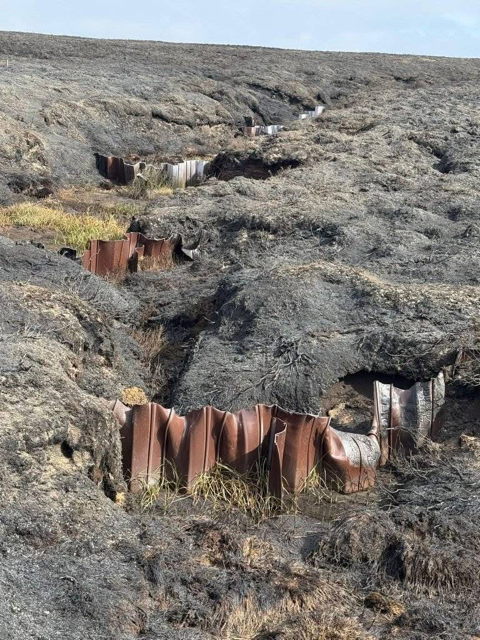
Even the plastic dams melted.
The moor in question, like so many that have received this treatment, had never actually been drained in the first place. There was nothing in the ground to undo. The vast sums of money, only the people who spent it know how much, and they aren't telling, but it is likely to be millions, because it usually is, were spent putting little plastic dams in the bottoms of natural gullies and planting sphagnum plugs across ground that was already wet. This was sold as restoration. A more honest description might be a very expensive way of running on the spot.
That worked well too.
It would be one thing if the rewetting orthodoxy had merely failed to deliver its promises. But the policy had a second leg, and that leg was the deliberate removal of the only management regime that has, demonstrably and over decades, kept these landscapes from going up in smoke. Cool burning, carried out in winter under strict conditions by people who know what they are doing, prevents catastrophic summer fires by removing the dry fuel load. It is not controversial among those who actually fight wildfires. They have been saying so, politely and at increasing volume, for years.
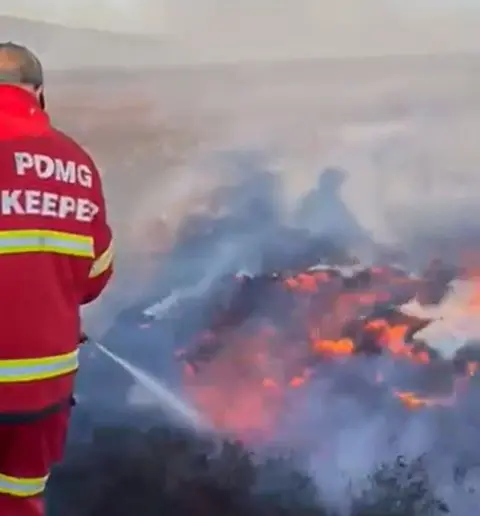
But cool burning was banned, because it offended the aesthetic preferences of people who do not have to put fires out. Sheep were taken off, because grazing offended them too. Heather was allowed to grow long and woody. Old, lignified vegetation accumulated, drying out in the spring sun. And then, when a spark inevitably arrived, the result was the kind of fire that burns down into the peat itself, releases the carbon that the rewetting was supposed to be locking up, sterilises the ground, and takes a generation to recover.
Meanwhile the moors managed by gamekeepers, the ones routinely derided in the briefings and policy papers of large conservation organisations, did not burn. They did not burn because they are managed. The keepers from those neighbouring estates were the ones helping the fire crews on National Trust ground last week, as they always are. They are usually first on the scene, last to leave, and quietest about it afterwards. They had already dealt with thirty-six wild camping and open fire incidents the previous weekend without anyone noticing.
But don't worry. The National Trust will soon be getting millions more to restore nature in the Peak District, rumoured to be as much as £20 million. The plastic dams will be replaced. The sphagnum plugs will be replanted. The reports will be written. The conferences will be conferenced. The press releases will assure us that this time, definitely, the moors will not burn.
So if you are manufacturing little plastic dams, or run a helicopter transport service, you will still have plenty of business.
As, of course, will the Fire and Rescue Service.