


‘Manufacturing prosecutions, misleading the public’: new report exposes decades of RSPB misconduct
A new report has exposed systematic failures in how the Royal Society for the Protection of Birds (RSPB) conducts wildlife crime investigations and reveals how the charity has abandoned its mission to protect Britain's birds in favour of harassing rural communities.
The report, ‘RSPB Uncovered: the missing Birdcrime files’, examines 14 investigations by the charity between 1990 and 2025. By interviewing key witnesses, analysing police reports and scouring government records via freedom of information requests, the report builds up a pattern of the RSPB routinely scapegoating rural communities in its so-called ‘birdcrime’ investigations.
It sheds particular light on the dubious practices of RSPB Senior Investigator Guy Shorrock and Head of Investigations Mark Thomas, working under the leadership of Conservation Director Mark Avery (1998 – 2011).
Report author A.B. O’Rourke says:
"It's shocking that charity workers, with no authority or legal powers, have seemingly been allowed to run amok through the countryside, firing accusations at anyone they believe is morally inferior, for the sole purpose of furthering the agenda of their masters."
"Cases where gamekeepers, bird breeders or egg enthusiasts end up with criminal records based on the RSPB's flawed or non-existent evidence and misinformation ought to be re-examined and public apologies issued. The fact this anarchy has gone on so long proves it is sanctioned by the charity's senior management”.
Key findings from the report:
In the 1990s, raptor breeders were convicted of taking wild birds using DNA testing systems the RSPB helped develop. The technique was later scrapped after government scientists found it to be wildly inaccurate, yet decades later RSPB staff still wrongly claim it helped tackle wildlife crime.
The RSPB exploited a loophole in the Wildlife and Countryside Act following changes that criminalised legal egg collections. By the time the government scrapped the amendment, the RSPB had prosecuted numerous hobbyists who hadn't broken any laws but ended up with criminal records and their collections confiscated.
RSPB mismanagement on Northumberland's Coquet Island reserve in 2015 jeopardised the population of roseate terns. Former warden, Paul Morrison, had led successful conservation efforts on the island for 25 years and it had been hailed as one of the RSPB’s most successful reserves. However, in 2024 Morrison was sacked to make the charity appear more diverse and inclusive. He was replaced by Stephen Westerberg, former head of RSPB Geltsdale in Cumbria, where bird populations had declined significantly. Since this change in management, gull control has been curbed; the charity bought a RIB for between £100,000-175,000 but it has proved impractical and harmful to the birds; and laws about disturbing schedule 1 birds have been ignored by staff.
Former gamekeeper Reg Cripps has been persecuted for over 20 years following a 2004 conviction for disturbing a goshawk. Evidence vital to the defence disappeared under suspicious circumstances, and the RSPB pressured birdwatchers to turn against him, with one twitcher told he would receive no help or work from the RSPB if he didn't cooperate.
Nevin Hunter, was the head of the National Wildlife Crime Unit between 2012-2014, after a 28-year career in the police. He became aware of extensive complaints about RSPB interference, including taking over police investigations, demanding to interview suspects, failing to apply for warrants, trespassing and interfering with crime scenes, covertly seizing evidence, planting cameras on private land, and failing to report incidents to police. Hunter said “Investigations should be instigated and led by police, who were the trained investigators. You would think that over time, as the police started to become more adept and more capable of investigating that [RSPB] would want to withdraw from that role. But actually, it upset them that they weren’t directly involved.”
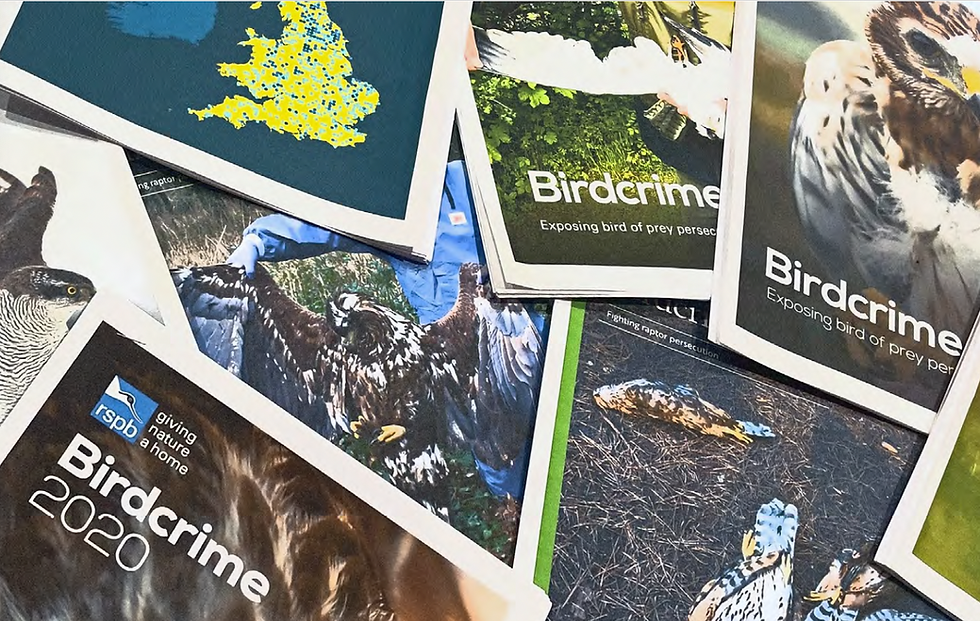
The RSPB does not always report crimes to the police, instead producing annual birdcrime reports that reject verifiable police figures in favour of unconfirmed public tips. The charity claims police data is unreliable while admitting its own figures may be inaccurate.
About the report:
'RSPB Uncovered’ was commissioned by the Campaign for the Protection of Moorland Communities (C4PMC) and is the first detailed investigation into the RSPB's wildlife crime operations.
The report was written by journalist A.B. O’Rourke, who has worked in media for 30 years, nearly half of it writing, producing and subediting daily news and current affairs programmes for Hong Kong television.
As deputy foreign editor of the South China Morning Post, he was responsible for international coverage, with a focus on Asia. Besides news, he has written, filmed and produced documentaries in the UK, Singapore, Hong Kong and the Philippines. He lives in the north of England.


