


As environmental groups finally admit fuel load matters, it is time for an audit on the land that wasn't managed

Something has shifted this summer, and it should not be allowed to pass quietly.
For the best part of a decade, the organisations holding the largest share of Britain's upland conservation estate told the country that wildfire was a problem of weather, arsonists and disposable barbecues. Land management, they said, had nothing to do with it. Those who argued otherwise were dismissed as self-interested, and worse.
Now look at what they are saying. Natural England's regional director for the North of England, writing on the regulator's own website on 10 August, accepted that reducing fuel loads through grazing, cutting and firebreaks is essential to preventing catastrophic moorland fires.
The RSPB, in its own words, has acknowledged that restoration reduces grazing pressure, reduced grazing increases vegetation, and more vegetation means fiercer fires that are harder to stop. And the National Trust, defending itself after Dunwich Heath went up in July, was at pains to point out that its Suffolk team had been cutting heather and maintaining firebreaks for years.
Read those three positions together. Every one concedes the point moorland communities have been making, and being abused for making, since at least 2018: fuel load is the one variable in wildfire that people can control before a fire starts, and if you do not control it, you are choosing an outcome.
Doing nothing is not neutral. It is a management decision, and it must be measured, audited and held to account like any other.
What that means in practice
If a keepered estate carries out cool burning in February, that intervention is licensed, mapped, recorded and inspected. If it goes wrong, the estate is prosecuted. If it goes right, nobody notices.
If a conservation charity removes grazing, stops all burning, lets heather grow woody and waist high, and installs leaky dams as its wildfire policy, that decision is not licensed, mapped or inspected by anyone. When the ground burns, the drought is blamed. When neighbouring gamekeepers arrive with fogging units and a bulldozer to cut the firebreak that saves the moor, the charity's press office thanks the fire service.
Both are decisions. Only one is measured. That asymmetry is no longer defensible.
The Moorland Association has called for an independent, evidence-led review of how the largest conservation landowners manage vegetation. That is the correct ask, and a modest one. If the RSPB and the National Trust are confident their approach reduces fire risk, an audit costs them nothing. If they are not, the public that funds them through membership, stewardship payments and Natural England grants deserves to know.
This argument has dragged on because words have been allowed to do the work evidence should be doing. "Rewetting" has been presented as fire prevention. Wet peat under three feet of dry, lignified heather is still under three feet of dry, lignified heather, and Tintwistle proved it. "Cutting" has been presented as a straight substitute for burning. On accessible ground it can be. On steep, broken, saturated moorland where machinery wrecks the peat it is meant to save, it is not, and the RSPB has just admitted as much. "Managed burning" has been conflated with wildfire in every headline for a decade, so a controlled winter burn and a July inferno on unmanaged ground appear as the same thing.
If we are to have a national wildfire policy that works, and the Climate Change Committee has said plainly that we need one, it must start with definitions everyone accepts and data everyone can see. What is the fuel load on this hectare? When was it last reduced, and how? Who is responsible if it burns? Those questions should be answered for every upland landholding in Britain, whoever owns it.
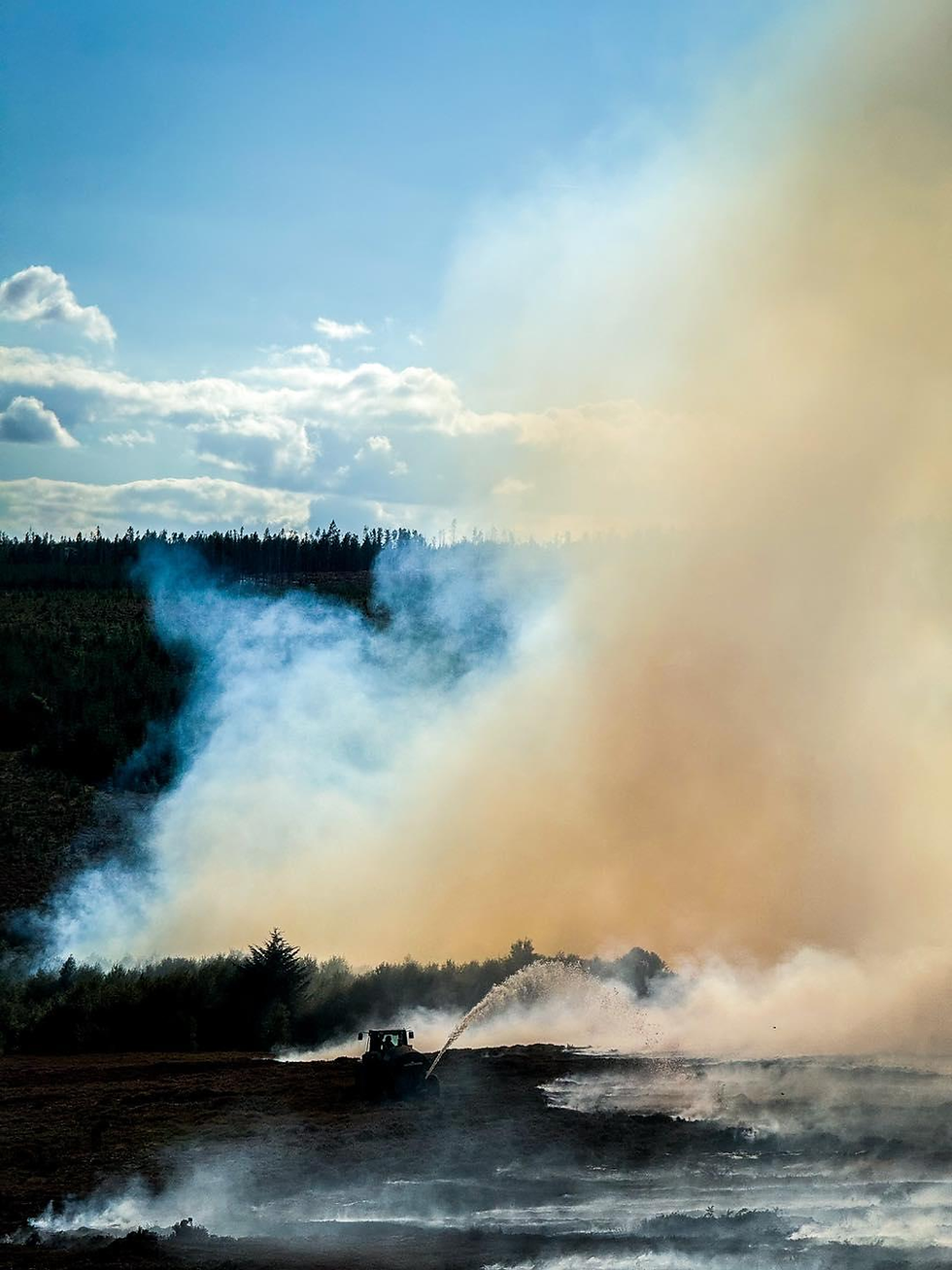
For years the loudest voices against moorland management have not been arguing about vegetation structure or fire behaviour. They have been arguing about people. Chris Packham and those who follow his lead have treated gamekeepers, farmers and estate workers as a group to be despised, and their communities as an obstacle rather than the people who keep the uplands standing.
That was always ugly. After this summer it is also wrong on the facts, and the conservation establishment's own statements prove it. When Natural England, the RSPB and the National Trust have all quietly moved to the ground moorland communities occupied a decade ago, the only people left on the old ground are campaigners who never had a land management argument. They had a cultural one.
We are not interested in a cultural war. We are interested in whether the moor burns.
So debate us on fuel load measurement. Debate us on Carrbridge, Tintwistle, Langdale, Dunwich and Abernethy. Debate us on whether cutting matches cool burning on deep peat, and bring your data. Those are the arguments the Wildfire Commission is now having with fire services and academics in the room.
What the country cannot afford is another season of a television presenter pointing at a keeper and calling him the problem while the heather behind him grows to the height of a man.
The concessions have been made. Doing nothing was a decision. It is time it was measured.


