Packham ignores BTO scientific data and Derbyshire Wildlife Trust in latest hostility inciting rant about Peak District raptor numbers

Chris Packham’s shrills of hysteria get more ridiculous by the day. In his latest effort to demonise rural communities he wants you to believe that the Peak District is a ‘Raptor death zone’. Speaking about his time filming Springwatch, the BBC presenter claimed that during three weeks at the National Trust's Longshaw Estate, he did not see "a single Buzzard or a single Kite flying over," describing the managed moorland beyond as like "peering over the fence and into the desert."
"What complete and utter bollocks that man spouts. He is either blind or a liar", was the response of one Peak District resident. Packham’s agenda here is once again less to do with conservation than a deep-rooted contempt for rural communities and the people who inhabit them.
This is a man who, just days earlier, spent five hours livestreaming himself stalking members of the Blackmore and Sparkford Vale Hunt across the Dorset countryside, flanked by hunt saboteurs armed with drones and thermal imaging equipment, branding the people he was pursuing "a bunch of entitled lunatics, possibly sociopaths or psychopaths." He called one huntsman a "tit" on camera. He described a lawful activity as "ancient medieval savagery" and "carnage."
He then urged his followers to hand over money to the North Dorset Hunt Saboteurs — the same group whose member was convicted and fined nearly £1,000 for assaulting an 82-year-old landowner, smashing a camera into the elderly man's head and leaving him bleeding on the ground.
This is not the behaviour of a conservationist. This is the behaviour of a man waging a culture war against rural Britain, dripping with the kind of metropolitan class snobbery that sneers at country people as backward, barbaric, and expendable. Packham doesn't see gamekeepers, farmers, and hunt followers as fellow citizens with legitimate livelihoods and deep roots in their communities. He sees caricatures — port-swilling toffs and knuckle-dragging yokels — and he has built an entire media brand around encouraging his urban following to despise them.
His "Raptor death zone" claim is just the latest iteration of this approach. Strip away the theatrical outrage and what are you left with? One man's claim that he personally didn't spot a buzzard from a single filming location over three weeks. That's it. No survey data. No methodology. No scientific rigour whatsoever. Just Chris Packham's word — presented as though it were irrefutable proof that an entire community of land managers are engaged in the systematic slaughter of protected birds.
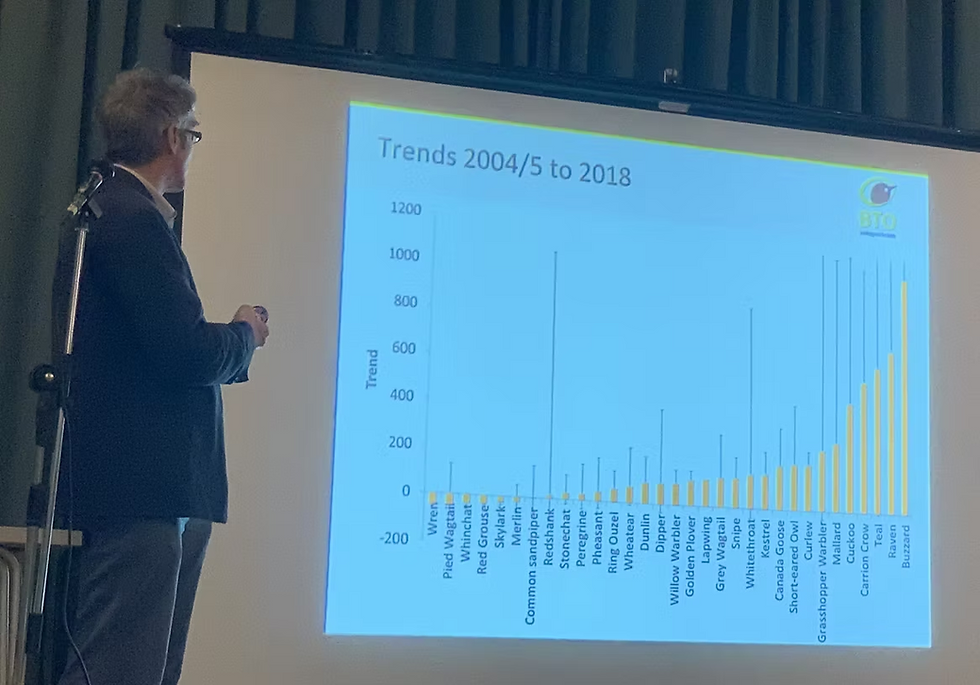
The actual evidence paints a very different picture — one Packham knows about and chooses to ignore because it doesn't serve his purpose. His own colleague in the conservation world, Tim Birch, previously of Derbyshire Wildlife Trust, has published video footage of himself in the Peak District observing peregrines, buzzards, merlins, and hen harriers in a single morning. Not over three weeks — in one morning. A BTO bird survey of the Peak District confirmed what moorland managers have long known: species diversity and biodiversity on managed moorland are thriving. Buzzards particular have increased over 800% staged a remarkable recovery across the region and are now a common sight.
The notion that Packham — a man who has spent his career spotting birds — somehow failed to see one in 21 days is either an extraordinary admission of professional incompetence or a deliberate fabrication. Either way, it is not the foundation for branding an entire landscape a "death zone."
This is how Packham operates. He makes incendiary claims, launders them through a compliant media that treats him as an unimpeachable authority, and moves on before anyone can hold him to account. The damage, however, stays behind. Gamekeepers and their families — people earning modest livings in some of the most physically demanding jobs in Britain — are left to deal with the consequences. Legal traps vandalised. Property damaged. Abuse hurled at them online by Packham's followers, who have been carefully taught that these are not working people deserving of respect but criminals and animal torturers. Children of gamekeeping families bullied at school because a celebrity on the television told the nation their parents are murderers.
And this is where the class dimension becomes impossible to ignore. Packham — a man who wears Prada, owns property in France, and earns handsomely from the BBC and his various media ventures — has appointed himself judge, jury, and executioner over communities whose average income is a fraction of his own.
He romanticises hunt saboteurs, many of whom are middle-class urban activists with no connection to or understanding of rural life, while demonising the gamekeepers, tenant farmers, and estate workers whose families have shaped these landscapes for generations. He compares their traditions to "medieval savagery" while fundraising for groups with convictions for violence against the elderly. The hypocrisy is breathtaking, but it is also revealing. This is not a man who wants dialogue or evidence-based policy. This is a man who wants surrender — and who uses his platform to bully anyone who refuses to give it.
The RSPB's own persecution figures for the Peak District, which Packham relies upon to justify his rhetoric, have themselves been subject to serious scrutiny. Many "confirmed" incidents were reported by a single witness — in several cases the same anti-grouse shooting campaigner who conveniently kept stumbling across evidence. This is the evidentiary foundation on which Packham builds his case for calling an entire region a "death zone" and an entire profession criminal.
The Peak District is not a "Raptor death zone." It is a working landscape where dedicated professionals manage moorland for biodiversity, wildfire prevention, water management, and rural livelihoods — and the BTO data, the thriving raptor populations, and the Lammergeier's safe passage all prove it. What the Peak District is becoming, thanks to people like Chris Packham, is a hostile environment for the very people who maintain it. That is not a tragic realisation. It is a deliberate strategy — and the tragedy is that the BBC continues to provide a platform for a man whose primary contribution to the countryside debate is inciting hatred against the people who actually live and work in it.