


Government commits £3m to repairing the wildfire damage in the North York Moors, yet does nothing to prevent them starting in first place

The government has just announced more than £3m of public money to repair the North York Moors after last summer's catastrophic wildfire. On the face of it, that is welcome news. The fire that broke out on Langdale Moor on 11 August burned for more than 40 days, covered nearly 10 square miles at its height, and left one of England's most treasured landscapes scarred and smouldering. Of course it needs fixing.
But step back and look at the wider picture, and something close to madness comes into focus. We are now spending £3.2m of taxpayers' money to undo damage that, with sensible land management, need never have happened on this scale at all. And we are doing it while continuing to back the very policies that make fires like Langdale more likely, not less.
Treating the symptom, ignoring the cause
The funding will go towards restoring peatland species such as sphagnum moss, repairing public rights of way, and re-establishing habitats across the moor. Tom Hind, chief executive of the North York Moors National Park Authority, has rightly pointed out that the money will also help repair the 10.5 miles of firebreaks that were cut to contain the blaze.
Read that again. Firebreaks. Cut in a panic, mid-emergency, while ten square miles of moorland went up in smoke. The fire was so serious it was declared a major incident on 13 August because of its proximity to Critical National Infrastructure at RAF Fylingdales. Smoke could be seen up to 80 miles away. Roads were closed. Crews fought the flames for more than six weeks.
This is what reactive land management looks like. We wait for the disaster, we scramble to contain it, and then we hand over millions to clear up afterwards. It is the most expensive possible way to manage a landscape, and the least effective.
The thing that would have helped was the thing we are discouraging
Here is the uncomfortable truth that successive governments and conservation bodies have been reluctant to confront. The single most effective tool for reducing wildfire risk on our moorlands is controlled burning, the careful, cool, seasonal burning of small patches of vegetation by experienced practitioners. It removes the build-up of dry, combustible fuel load that turns a stray spark into a 40-day inferno.
Instead, policy has moved steadily in the opposite direction. Restrictions on controlled burning have tightened. Gamekeepers and land managers, the very people with the equipment, the knowledge and the boots-on-the-ground presence to manage fuel loads and tackle fires early, have been increasingly sidelined and second-guessed. The prevailing orthodoxy treats any form of managed burning with suspicion, while waterlogged sphagnum and "rewetting" are presented as the answer to everything.
The evidence keeps proving the gamekeepers right
This is not a matter of opinion or rural sentiment. The pattern repeats itself, fire after fire, year after year, and it always points the same way. When wildfire tears across our uplands, it is almost invariably the unmanaged ground, the moorland left to its own devices or stripped of active keepering, that burns longest, hottest and most destructively.
The managed moors, where gamekeepers carry out controlled burning, cut firebreaks as routine and maintain the access and equipment to respond within minutes, again and again act as the natural barriers that bring a fire to a halt.
We saw it at Saddleworth and Marsden in 2018, where the worst of the devastation fell on ground without active management. We saw it across the Pennines and the Peak District in the dry summers since. And the comparison is stark wherever you care to look: a keepered grouse moor, with its mosaic of recently burned patches and broken-up fuel load, simply does not carry fire the way a neglected expanse of rank, desiccated heather does. The gamekeeper's burning programme is not a hazard. It is the firebreak that already exists before the fire starts.
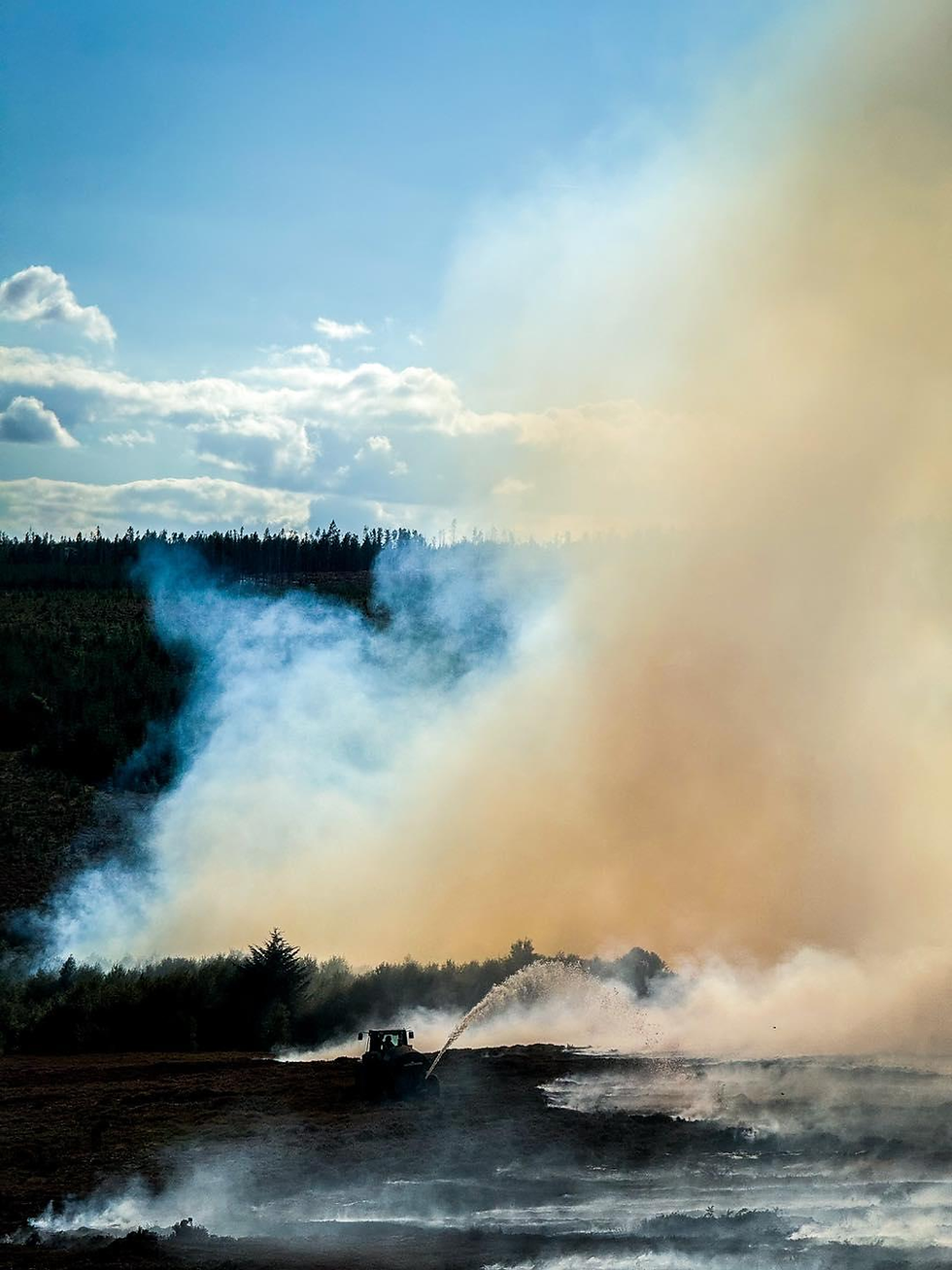
A landscape choked with unmanaged vegetation, by contrast, is a landscape primed to burn. When the prolonged hot, dry weather and strong winds arrived last August, as they increasingly will in a changing climate, there was plenty of fuel waiting. The fire behaved accordingly. The lesson is not new. It is simply being ignored.
The numbers do not lie
Consider the basic economics. Controlled burning, carried out by skilled land managers as part of routine moorland management, costs the public purse next to nothing. In many cases it is paid for by the very shooting estates that the prevailing political mood seems determined to drive out of business.
Wildfire, by contrast, costs a fortune. Six weeks of fire and rescue deployment. A major incident response. Ten square miles of destroyed habitat, lost carbon, damaged archaeology and ruined infrastructure. And now £3.2m to put it back together, with no guarantee the restored landscape will be any more resilient than the one that burned, unless the underlying management approach changes.
We are quite literally paying millions to repair damage caused, in part, by our refusal to allow the cheap, proven, preventative measure that would have reduced the risk in the first place.
A choice, not an accident
A government spokesperson noted that healthy peatland can naturally hold water, slowing the spread of future fires and reducing flood risk downstream. That is true, and restoring peatland is a worthy goal. But peatland restoration and controlled burning are not competing philosophies. They work hand in hand. Wet peat and managed vegetation together build genuine resilience. Banishing the managers and hoping the moor looks after itself does not.
The Langdale fire was, according to the investigation by North Yorkshire Fire and Rescue Service, likely caused by cooking with a naked flame. In other words, by a member of the public on an open, accessible moor. The ignition source was almost incidental. The reason a single flame could become a 40-day major incident was the state of the landscape it landed in.
We can carry on as we are: discouraging prevention, waiting for the next inevitable blaze, and reaching for the public chequebook each time the smoke clears. Or we can do the sensible, cheaper, more effective thing and back the land managers who can stop these fires before they start.
Three million pounds to repair Langdale Moor. The real question is why we let it burn in the first place, and why we are still pursuing the policies that all but guarantee it will happen again.


